REFLECTION OVER HORIZONTAL AND VERTICAL LINES WORKSHEET
Subscribe to our ▶️ YouTube channel 🔴 for the latest videos, updates, and tips.
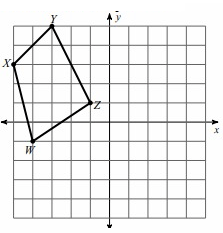
Problem 1 :
Reflection across y = -1
Problem 2 :
Reflection across y = -1
C (2, 0), D (5, 3), E (4, -1)
Problem 3 :
Reflection across y = -1
Q (-3, -4), R (-4, 0), S (-2, 0)
Problem 4 :
Reflection across x = -2
Q (-4, 1), R (-3, 5), S (0, 3), T (-3,-1)
Answer Key
1) W' (-4, -1), X’ (-5, -5), Y’ (-3, -7), Z’ (-1, -3)
2) C’ (2, -2), D’ (5, -5) and E' (4, -1)
3) Q’ (-3, 2), R’ (-4, -2) and S’ (-2, -2)
4) Q’ (0, 1), R’ (-1, 5), S’ (-4, 3) and T’ (-1, -1)
Problem 1 :
Reflection across y = -1
R (-3, -5), N (-4, 0), V (-2, -1) E (0, -4)
Problem 2 :
Reflection across x = 3
F (2, 2), W (2, 5), K (3, 2)
Problem 3 :
Reflection across x = -1
V (-3, -1), Z (-3, 2), G (-1, 3), M (1, 1)
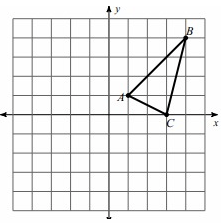
Problem 4 :
Reflection across x = 3
Problem 5 :
The points (3, 0) and (–1, 0) are invariant points under reflection in the line L1, while the points (0, –3) and (0, 1) are invariant points under reflection in the line L2.
(a) Name the lines L1 and L2
(b) Write down the images of the points P(3, 4) and Q(–5, –2) on reflection in L1. Name the images as P′ and Q′ respectively.
(c) Write down the images of P and Q on reflection in L2. Name the images as P′′ and Q′′ respectively.
(d) State or describe a single transformation that maps P′ onto P′′.
Answer Key
1) R’ (-3, 3), N’ (-4, -2), V' (-2, -1) and E’ (0, 2)
2) F’ (4, 2), K (3, 2) and W’ (4, 5)
3) V’ (1, -1), Z’ (1, 2) and M’ (-3, 1)
4) A’ (5, 1), B’ (2, 4) and C (3, 0)
5) a)
Rx P(3, 4) = P′(3, – 4)
Rx Q(–5, –2) = Q′ (–5, 2)
(b)
Rx P(3, 4) = P′(3, –4)
Rx Q(–5, –2) = Q′(–5, 2)
(c)
Ry P(3, 4) = P′′ (–3, 4)
Ry Q(–5, –2) = Q′′ (–5, –2)
d) Ro (3, –4) = (–3, 4)
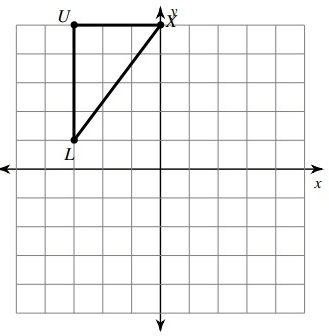
Graph the image of the figure using the transformation given
Problem 1 :
Reflection across y = -x.
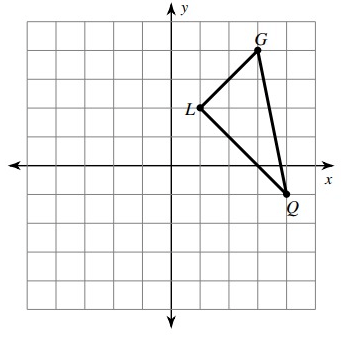
Problem 2 :
Reflection across y = -x.
Problem 3 :
Reflection across the line y = -x
T (2, 2), C (2, 5), Z (5, 4), F (5, 0)
Problem 4 :
Reflection across y = -x.
H (-1, -5), M (-1, -4), B (1, -2), C (3, -3)
Problem 5 :
Use graph paper for this questions.
(a) Plot the points A (4, 6) and B (1, 2)
(b) A' is the image of A when reflected in x-axis.
(c) B' is the image of B when B is reflected in the line AA′.
(d) Give the geometrical name for the figure ABA′B′.
Problem 6 :
Use graph paper for this question. A(0, 3), B(3, –2) and O (0, 0) are the vertices of triangle ABO.
(a) Plot the triangle on a graph sheet taking 2 cm = 1 unit on both the axes.
(b) Plot D, the reflection of B in the y-axis, and write its co-ordinates.
(c) Give the geometrical name of the figure ABOD.
Problem 7 :
Use a graph paper to answer the following questions. (Take 1 cm = 1 unit on both axes)
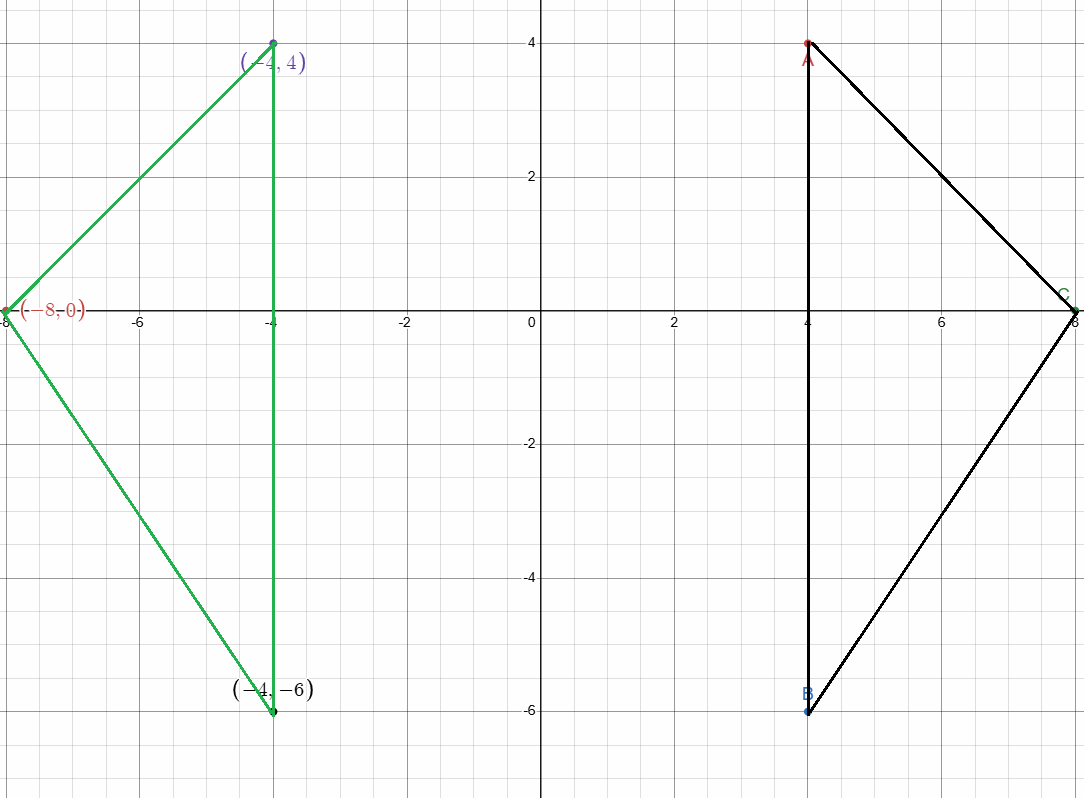
(a) Plot A(4, 4), B(4, –6) and C(8, 0), the vertices of a triangle ABC.
(b) Reflect ABC on the y-axis and name it as A′B′C′.
(c) Write the coordinates of the image A′, B′ and C′.
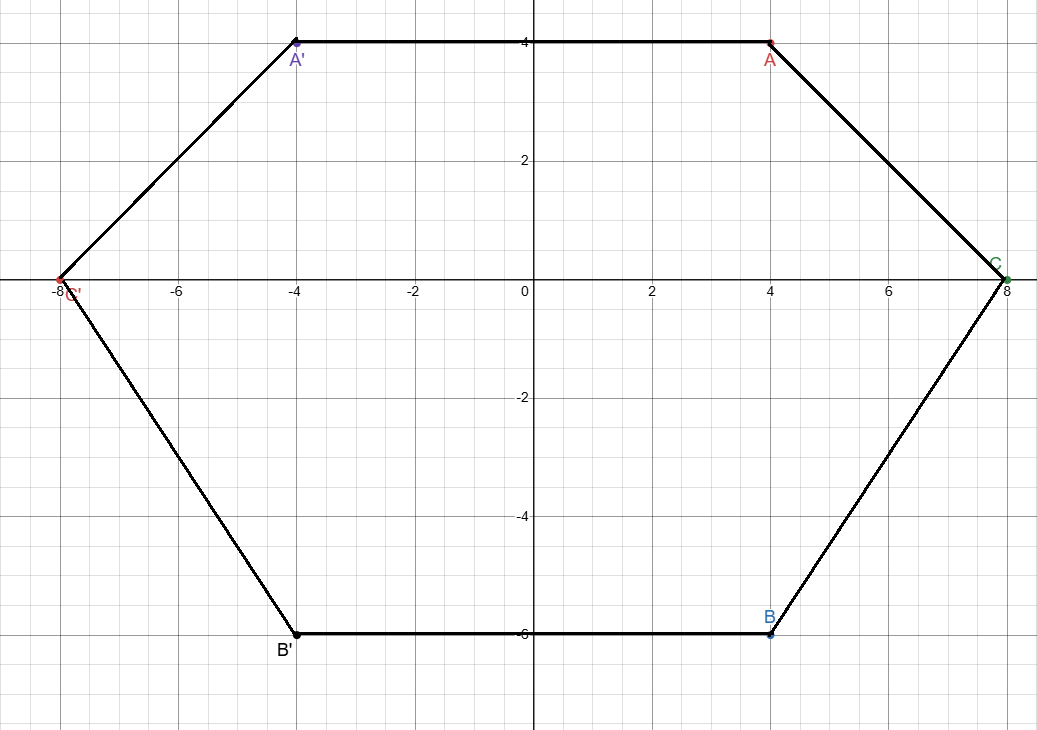
(d) Give a geometrical name for the figure AA′C′B′BC.
Problem 8 :
A triangle with vertices A (1, 2), B (4, 4) and C (3, 7) is first reflected in the line y = 0 onto ∆A′B′C′ and then ∆A′B′C′ is reflected in the origin onto ∆A′′B′′C′′. Write down the co-ordinates of
(a) A′, B′ and C′
(b) A′′, B′′ and C′′.
Problem 9 :
Write down the coordinates of the image of the point (3, –2) when :
(a) reflected in x-axis.
(b) reflected in y-axis.
(c) reflected in the origin.
Answer Key
1)
X (0, 5) ==> X’ (-5, 0)
L (-3, 1) ==> L’ (-1, 3)
U (-3, 5) ==> U’ (-5, 3)
2)
(x, y) ==> (-y, -x)
L (1, 2) ==> L’ (-2, -1)
G (3, 4) ==> G’ (-4, -3)
Q (4, -1) ==> Q’ (1, -4)
3)
T (2, 2) ==> T’ (-2, -2)
C (2, 5) ==> C’ (-5, -2)
Z (5, 4) ==> Z’ (-4, -5)
F (5, 0) ==> F’ (0, -5)
4)
H (-1, -5) ==> H’ (5, 1)
M (-1, -4) ==> M’ (4, 1)
B (1, -2) ==> B’ (2, -1)
C (3, -3) ==> C’ (3, -3)
a)
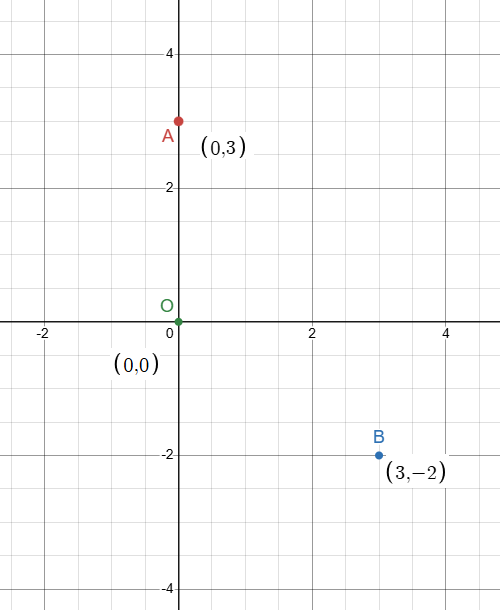
b) B (3, -2) ==> D (-3, -2)
c) ABOD is a quadrilateral..
5) a)
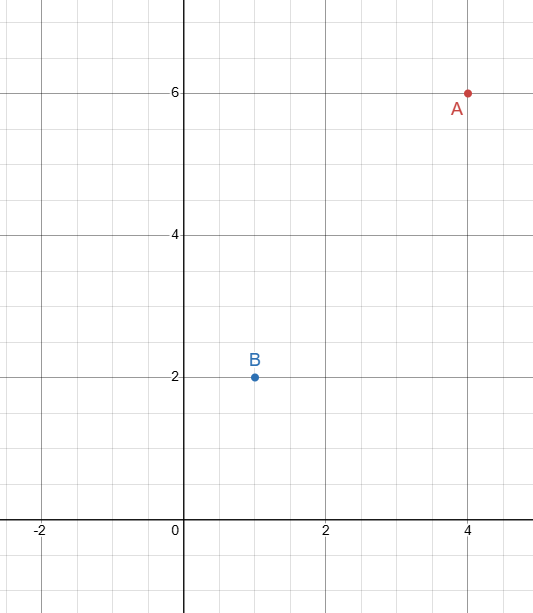
b)
(x, y) ==> (x, -y)
A (4, 6) ==> A' (4, -6)
c)
B (1, 2) ==> B' (7, 2)
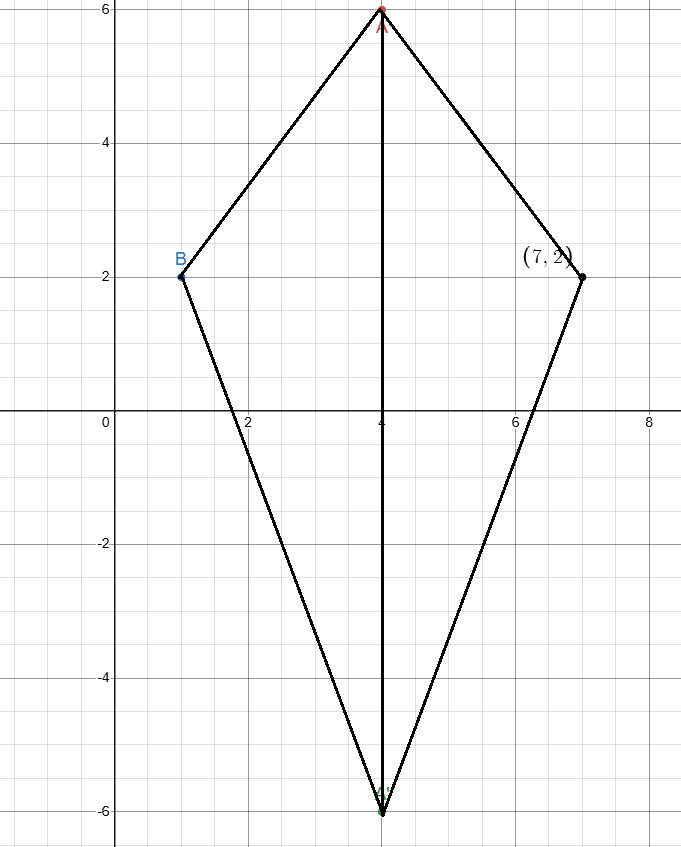
d) After plotting B' and joining the points together, we get the geometrical shape kite.
6) a)
b) B (3, -2) ==> D (-3, -2)
c) c) ABOD is a quadrilateral.
7) a)
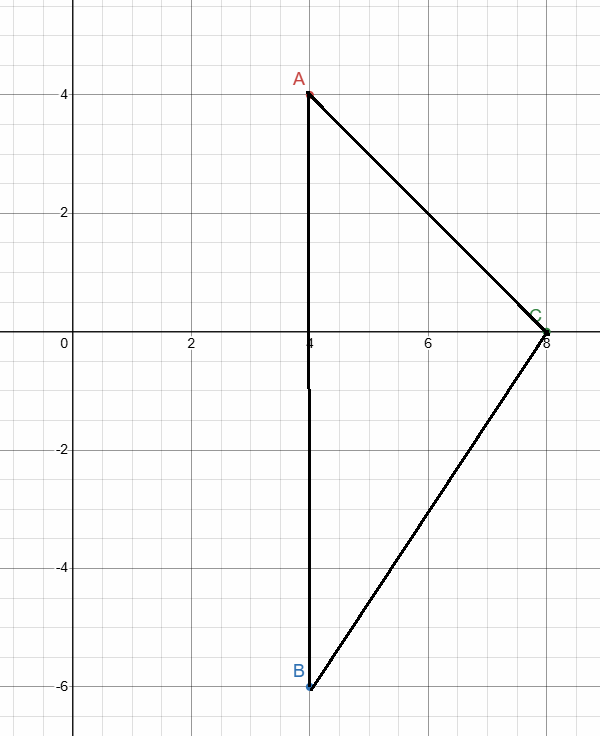
b)
A (4, 4) ==> A'(-4, 4)
B (4, –6) ==> B'(-4, -6)
C (8, 0) ==> C' (-8, 0)
c)
d)
8)
(a) A′ (1, –2), B′ (4, – 4) and C′ (3, –7)
(b) A′′ (–1, 2), B′′ (–4, 4) and C′′ (–3, 7)
9)
(a) Rx (3, –2) ==> (3, 2)
(b) Ry (3, –2) ==> (–3, –2)
(c) Ro (3, –2) ==> (–3, 2)
Subscribe to our ▶️ YouTube channel 🔴 for the latest videos, updates, and tips.
Recent Articles


-
Finding Range of Values Inequality Problems
May 21, 24 08:51 PM
Finding Range of Values Inequality Problems -
Solving Two Step Inequality Word Problems
May 21, 24 08:51 AM
Solving Two Step Inequality Word Problems -
Exponential Function Context and Data Modeling
May 20, 24 10:45 PM
Exponential Function Context and Data Modeling